Ronda is one of Andalucía’s most dramatic historic towns, known for the Puente Nuevo spanning El Tajo Gorge, its Moorish Old Town and viewpoints overlooking the Serranía de Ronda.
The top things to do in Ronda include crossing the Puente Nuevo, walking the Camino del Desfiladero del Tajo, exploring the Old Town, visiting the Arab Baths and Casa del Rey Moro, and enjoying the views from Alameda del Tajo. Most of the principal Ronda attractions are within walking distance, making it possible to experience the highlights in one full day.
This guide covers the best things to do in Ronda, Spain, including essential landmarks, free viewpoints, historic sites and a practical one-day route.
Table of Contents
ToggleTime needed: One full day for the principal sights or one night for a more relaxed visit.
Best for: Historic monuments, gorge views, walking, photography and local wine.
Getting around: Most central attractions can be reached on foot, although Ronda has cobbled streets, slopes and steep descents.
Must-see attractions: Puente Nuevo, the Desfiladero del Tajo, Ronda Old Town, the Arab Baths and Alameda del Tajo.
Best time to visit: Spring and autumn offer comfortable walking conditions. In summer, arrive early to avoid the strongest heat and largest day-trip groups.
Good to know: Some monuments, gorge paths and viewpoints involve numerous steps and may not be suitable for visitors with limited mobility.
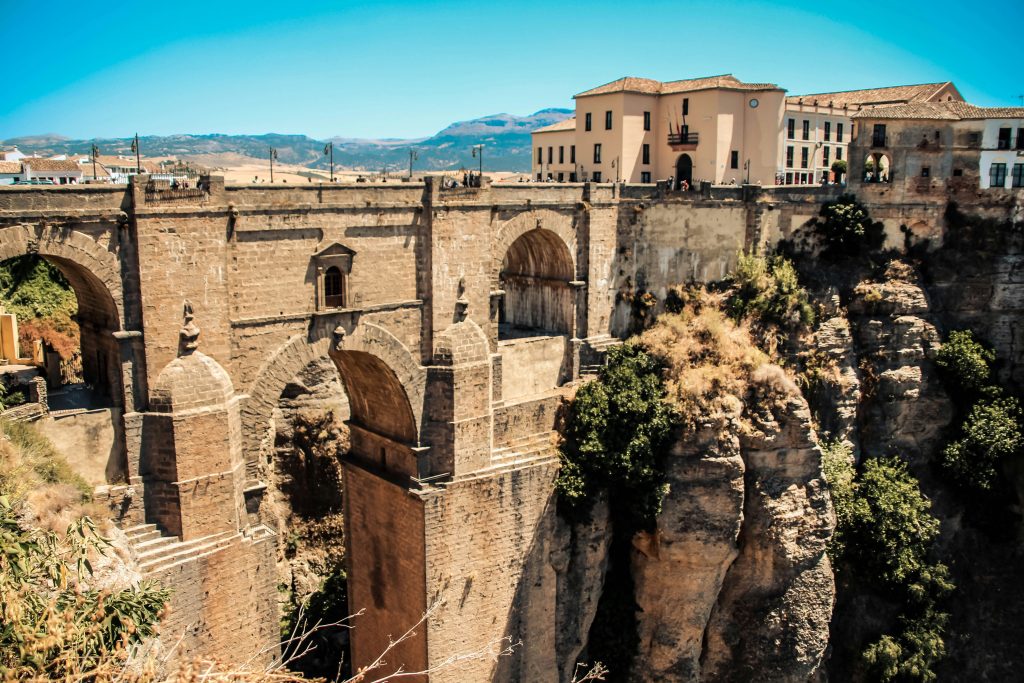
No list of best things to do in Ronda would be complete without the Puente Nuevo. Completed in 1793, the monumental stone bridge spans El Tajo Gorge and connects Ronda’s newer district with its historic Old Town.
Pause on the bridge to look down towards the Guadalevín River, then walk to the Mirador de Aldehuela and the viewpoints beside Plaza de España. For the classic photograph of the entire bridge, follow the path descending from Plaza María Auxiliadora or enter the Camino del Desfiladero del Tajo.
Crossing the bridge is free and takes only a few minutes, but allow at least 30 minutes to explore its different viewpoints. The bridge can become extremely busy, so early morning is the best time for photographs and a quieter experience.
Exploring La Ciudad, Ronda’s historic Old Town, is one of the essential things to do in Ronda. Cross the Puente Nuevo and wander through narrow streets lined with whitewashed houses, historic palaces, churches and small squares.
Continue towards Plaza Duquesa de Parcent, where you will find the Iglesia de Santa María la Mayor and Ronda Town Hall. Nearby, the Palacio de Mondragón contains the Municipal Museum and peaceful courtyards overlooking the surrounding countryside.
The Old Town is compact enough to explore on foot, but its cobbled streets and slopes make comfortable footwear advisable. Allow at least one to two hours, depending on whether you enter its monuments. Wandering without a rigid route is part of its appeal, although Plaza Duquesa de Parcent and the city walls should not be missed.
Casa del Rey Moro is one of the most unusual places to visit in Ronda. Despite its name, the house was never the residence of a Moorish king. Its principal historic feature is the 14th-century water mine (Mina Secreta) cut into the rock beneath the property.
A steep staircase descends through the mine towards the Guadalevín River, revealing how water was once transported into the fortified city. Back above ground, visitors can explore the terraced gardens overlooking El Tajo Gorge.
The descent involves numerous worn and uneven steps, followed by the same demanding climb back up. It is unsuitable for some visitors with limited mobility, but it offers a markedly different perspective from Ronda’s conventional viewpoints. Allow approximately 45–60 minutes and check the official opening hours and admission price before visiting.
For some of the best free views in Ronda, walk through Jardines de Cuenca. These terraced gardens cling to the eastern side of El Tajo Gorge, opposite Casa del Rey Moro, and offer several viewpoints over the cliffs, historic buildings and Puente Nuevo.
Paths and stairways connect the different terraces, making the gardens a useful route between the Puente Nuevo and Puente Viejo. The perspective changes as you descend, with particularly attractive views across the gorge towards the hanging gardens of Casa del Rey Moro.
Visiting Jardines de Cuenca is one of the best free things to do in Ronda and normally takes around 20–30 minutes. Combine the gardens with the Arab Baths and the historic bridges to create a scenic walking circuit through the lower part of the city.
The Baños Árabes are among the most important historic things to see in Ronda, Spain. Constructed during the Islamic period, they are considered one of the best-preserved medieval bath complexes on the Iberian Peninsula.
Visitors can walk through the cold, warm and hot rooms and see the distinctive star-shaped openings that once helped illuminate and ventilate the building. The remains of the water system also explain how water was supplied from the nearby Arroyo de las Culebras.
The baths are situated below the Old Town, close to the Puente Árabe and the finishing point of the completed Desfiladero route. This makes them easy to include in a walking itinerary through the lower part of Ronda. Allow approximately 30 minutes and check the municipal tourism website for current admission prices and seasonal opening hours.
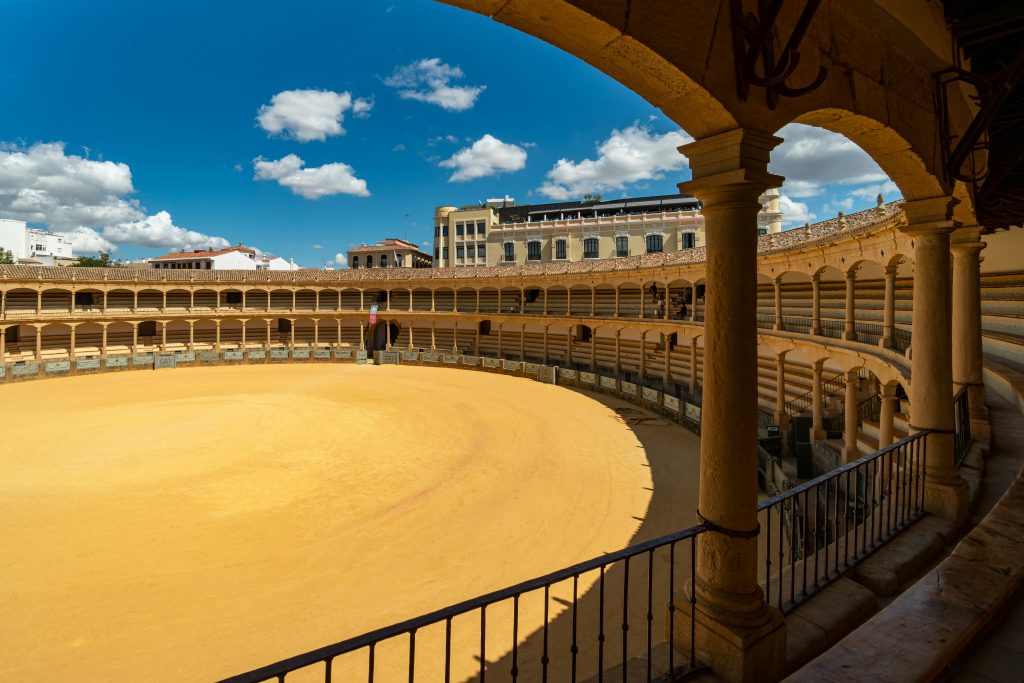
The Plaza de Toros is one of the best-known attractions in Ronda and an important part of the city’s architectural and cultural history. Opened in 1785, it is recognised for its monumental stone construction, double gallery of arches and unusually large circular arena.
Admission includes access to the bullring and museum spaces exploring the history of the Real Maestranza, horsemanship and bullfighting in Ronda. Visitors who do not wish to support bullfighting can still appreciate the building’s architecture and historical significance while choosing not to attend an event.
The bullring stands beside Alameda del Tajo and the tourist information office, only a short walk from the Puente Nuevo. Allow approximately 45 minutes if entering, and check the official Real Maestranza website for current prices, opening hours and temporary closures.
While the bullring itself is a remarkable historical site, we recommend skipping an actual bullfight. The practice is widely criticized today and is viewed by many as an outdated and controversial aspect of wildlife tourism.
One of the most exciting new Ronda attractions is the Camino del Desfiladero del Tajo, a ticketed route descending into the gorge beneath the Puente Nuevo.
The first section leads from Plaza María Auxiliadora towards the base of the bridge. From 16 September 2026, the completed route will continue along elevated walkways through El Tajo Gorge before finishing near the former Ermita de San Miguel and the Arab Baths. The full route covers nearly one kilometre and allows visitors to experience the cliffs, river and historic bridges from inside the gorge.
The descent includes steep and uneven sections, so suitable footwear is essential. Tickets, current opening hours and access restrictions should be checked before visiting.
RELATED READING | Desfiladero del Tajo in Ronda: Route, Tickets and Visitor Guide
For an extra dose of adventure, consider the Via Ferrata climbing route, where you can scale the cliffs for an exhilarating perspective of the gorge. These options offer unique and unforgettable views, so choose the one that best suits your preferences!
If you are comparing Andalucía’s best-known gorge walks, the Desfiladero del Tajo is the more convenient option for a day in Ronda. Caminito del Rey is a separate excursion outside the town and requires additional travel and considerably more time.
Planning to visit both attractions? Read our guide to travelling from Ronda to Caminito del Rey.
If you are wondering what to do in Ronda between monument visits, take a walk through Alameda del Tajo. This 19th-century public park has shaded pathways, mature trees and balconies overlooking the Serranía de Ronda.
Continue along Paseo de Blas Infante to the cliff-edge viewpoints near the Plaza de Toros. From here, the landscape opens across the valley and surrounding mountains, making it an excellent place for photographs or a quiet break.
The park is free to enter and is especially pleasant early in the morning or towards sunset. It is also a practical starting point for a walking route through central Ronda: begin at the Alameda, pass the bullring and Mirador de Ronda, then continue towards the Puente Nuevo and Old Town.
Plaza Duquesa de Parcent is one of the most attractive squares in Ronda’s Old Town. Surrounded by historic buildings and trees, it provides a calmer contrast to the busy area around the Puente Nuevo.
The principal landmark is the Iglesia de Santa María la Mayor, constructed on the site of the city’s former main mosque following the Christian conquest of Ronda. Its architecture reflects several periods and styles, while elements associated with the earlier Islamic building remain visible.
The square is also bordered by Ronda Town Hall and lies close to the Palacio de Mondragón. Together, these landmarks make it one of the most rewarding things to see in Ronda for visitors interested in the city’s layered history. Allow approximately 30–45 minutes, or longer if entering the church and nearby museum.
The Puerta de Almocábar and the surviving city walls reveal Ronda’s importance as a fortified medieval settlement. The gate stands at the southern entrance to the historic quarter, beside the atmospheric Barrio de San Francisco.
Walking through the restored gateway is free and offers a quieter experience than the area immediately surrounding the Puente Nuevo. From here, you can follow the walls, explore the local streets or continue uphill towards Plaza Duquesa de Parcent.
This is one of the more overlooked things to do in Ronda, despite being within easy walking distance of the principal Old Town monuments. It fits particularly well into a circular walking route connecting the Old Town, Arab Baths and lower bridges. Allow approximately 20–30 minutes for the gate and surrounding walls.
For travellers looking for unique things to do in Ronda, the surrounding countryside is known for its vineyards, olive groves and rural estates.
Ronda forms part of the Sierras de Málaga wine region, and several local bodegas offer guided visits and tastings. Bodega Descalzos Viejos is particularly distinctive, occupying a former convent surrounded by vineyards. Other wineries around Ronda produce red, white and rosé wines using both Spanish and international grape varieties.
Another option is LA Almazara, an olive-oil estate designed by Philippe Starck, where visitors can learn about local olive cultivation and taste extra virgin olive oils.
Most wineries and rural estates are outside the historic centre, so advance booking and private transport are normally required. Allow at least two to three hours and consider this an alternative to part of the city itinerary rather than an addition to a packed one-day visit.
For a special touch, consider staying at the Cortijo LA Organic guesthouse, a charming retreat nestled among olive groves.
Discover its architecture, visitor experience and olive-oil tastings in our complete guide to LA Almazara in Ronda.
If you’re travelling from Marbella and need transport, we recommend this guided winery tour with Get Your Guide. It’s a convenient way to explore Ronda and enjoy its wine offerings.
The Puente Nuevo may be Ronda’s most famous bridge, but two smaller historic crossings can be found deeper in the gorge.
The pedestrian Puente Viejo connects the Old Town with the Padre Jesús neighbourhood and provides views along the Guadalevín River. Below it stands the bridge commonly known as the Puente Árabe or Puente Romano. Although its exact origins are debated, the crossing has been rebuilt during different periods of Ronda’s history.
These bridges are close to the Arab Baths, Jardines de Cuenca and the exit of the completed Desfiladero route. Visiting them is one of the quieter free things to do in Ronda and helps explain how the different parts of the city were connected before the Puente Nuevo was completed.
For a completely different view of the landscape, local outdoor operators offer tandem paramotor and paratrike flights over the countryside surrounding Ronda.
Flights are guided by a professional pilot and depend on suitable wind and weather conditions. Locations, durations and departure times can therefore change, and reservations may be rescheduled when conditions are unsuitable.
This is one of the more adventurous things to do near Ronda, but it requires additional time outside the historic centre. For a one-day visit, treat it as an alternative to a winery or extended sightseeing rather than trying to include everything in the same itinerary.
Ronda’s food scene ranges from informal tapas bars to destination dining. Look for seasonal produce, local cheeses, traditional Andalusian dishes and wines carrying the Sierras de Málaga designation.
For a special occasion, Bardal, led by chef Benito Gómez, currently holds two Michelin stars and serves creative tasting menus inspired by local ingredients and traditions. Advance booking is essential.
For a more casual meal, explore Calle Nueva, Plaza del Socorro and the streets around the Old Town. Casa Ortega serves traditional and contemporary dishes in a central setting, while Restaurante Puerta Grande offers Andalusian cooking close to the Puente Nuevo.
Ronda’s compact centre makes it possible to see the principal attractions in one day, although you will need an early start if you plan to enter several monuments.
Morning: Begin at Alameda del Tajo and walk towards the cliff-edge viewpoints beside the Plaza de Toros. Continue to the Puente Nuevo before the busiest day-trip groups arrive, then cross into Ronda’s Old Town.
Late morning: Explore Plaza Duquesa de Parcent, the Iglesia de Santa María la Mayor and the Palacio de Mondragón. Continue towards the Puerta de Almocábar and the historic city walls.
Afternoon: Walk down towards the Arab Baths and Puente Viejo. From here, visit Casa del Rey Moro or walk the Camino del Desfiladero del Tajo. Both involve steep sections, so attempting both may feel rushed.
Evening: Return through Jardines de Cuenca and finish near the Puente Nuevo. Mirador de Aldehuela is a convenient final stop for views over the gorge and surrounding countryside.
Ronda can be reached by car, bus or train from several destinations in Andalucía. Driving generally offers the most flexibility, particularly if you want to visit a winery or explore the surrounding countryside.
Ronda is approximately 60 kilometres from Marbella. The drive normally takes around 1 hour 10 minutes to 1 hour 30 minutes, depending on traffic and road conditions. The mountain road is scenic but includes numerous bends, so allow extra time if you prefer to drive slowly.
If you do not want to drive, guided Ronda tours departing from Marbella usually include transport and time around the Puente Nuevo and Old Town.
RELATED READING | 16 Best Day Trips from Marbella for Every Type of Traveller
Driving from Málaga normally takes approximately 1 hour 30 minutes, depending on the route and traffic. Ronda also has train and bus connections, but journey times and frequencies vary, so check the current timetable before travelling.
A rental car is most useful if you intend to combine Ronda with wineries, white villages or other places in the Serranía. Visitors concentrating on the historic centre will not need a car once they have arrived.
Bus and train schedules vary by route and season, so compare the current departure times before planning a same-day return journey.
Driving into the narrow streets of the Old Town is unnecessary. It is usually easier to use a public car park in the newer part of Ronda and explore the historic centre on foot.
Parking becomes more difficult during weekends, public holidays and major events, so arrive early whenever possible.
Ronda is worth visiting for its combination of dramatic scenery, historic architecture and compact, walkable centre. The Puente Nuevo and El Tajo Gorge are its defining landmarks, but the Old Town, Arab Baths, historic walls and surrounding wine country give visitors considerably more to explore.
With only a few hours, prioritise the Puente Nuevo, Alameda del Tajo and Old Town. With a full day, add the Camino del Desfiladero del Tajo, Arab Baths and either Casa del Rey Moro or the Palacio de Mondragón. Staying overnight provides a quieter experience after many organised day trips have departed.
Let’s stay in touch! Follow us @taolivincom
Disclosure: All listings featured on TAO LIVIN’ are independently selected by our editors. If you click through and book something through our links, we may earn a commission at no extra cost to you. Thanks for your support!