Choosing among the international schools in Marbella starts with three practical questions: which curriculum does your child need, which qualification should they work towards and how far can your family realistically travel each school day?
Marbella offers British, International Baccalaureate, American, Spanish, Swedish and French educational pathways, with a German international school just outside the municipality. However, these schools do not all cover the same ages or lead to the same qualifications. Some provide continuity from Early Years to age 18, while others specialise in a particular language, curriculum or educational stage.
This guide compares the main international and bilingual schools in and around Marbella. They are not ranked from best to worst: the right choice depends on your child’s age, current curriculum, language needs, intended university system and where your family plans to live.
Table of Contents
ToggleMarbella’s international schools fall into several practical clusters: Nueva Andalucía and Puerto Banús, central Marbella and Sierra Blanca, San Pedro, and east Marbella. Location matters because the daily school run often influences where families choose to live. The table below compares the main options.
| School | Location | Ages or stages | Main curriculum | Final pathway | A useful option for |
|---|---|---|---|---|---|
| Aloha College Marbella | Nueva Andalucía | Ages 3–18 | British international curriculum | IGCSEs followed by IB Diploma or A-Levels | Families wanting a choice between IB and A-Levels |
| Swans International School | Marbella centre and Sierra Blanca | Ages 3–18 | British curriculum | GCSEs followed by the IB Diploma | Families seeking a British education followed by an IB Sixth Form |
| British International School of Marbella (BISM) | Nagüeles | Ages 2–18 | English National Curriculum | GCSEs and A-Levels | British-system continuity from preschool to Sixth Form |
| English International College (EIC) | Ricmar, east Marbella | Ages 3–18 | British curriculum | IGCSEs and International A-Levels | A traditional British academic route in east Marbella |
| Laude San Pedro International College | San Pedro de Alcántara | Ages 2.5–18 | British and Spanish pathways | British qualifications or ESO and Spanish Bachillerato | Families comparing British and Spanish education |
| The American College in Spain | Puerto Banús | Middle school, high school and early university programmes | US education system | American High School Diploma, GED and university-transfer pathway | Older students seeking an American education |
| Svenska Skolan Marbella | Nueva Andalucía | Swedish preschool class–Year 6 on campus; distance arrangements for older pupils | Swedish curriculum | Swedish compulsory-school pathway | Swedish-speaking families |
| École Française Internationale de Marbella (EFIM) | Marbella centre | Petite Section to CM2 | French curriculum with trilingual education | French nursery and primary education | Francophone and multilingual families with younger children |
| Colegio Alborán | East Marbella | Ages 3–18 | Spanish bilingual curriculum | ESO and Spanish Bachillerato | A Spanish private-school education in a multilingual setting |
| Deutsche Schule Málaga | La Mairena, Ojén | Kindergarten to upper secondary | German-Spanish education | German International Abitur | Families seeking continuity with the German system |
Marbella’s schools offer several different curriculum pathways. The best option will depend on your child’s current curriculum, age and likely university destination.
| Educational route | Typical qualifications | Relevant schools | Particularly useful when |
|---|---|---|---|
| British followed by A-Levels | GCSEs or IGCSEs, followed by A-Levels | BISM and EIC; Aloha also offers A-Levels | The pupil is already in the British system or prefers subject specialisation |
| British followed by IB | GCSEs followed by the IB Diploma | Swans; Aloha also offers the IB Diploma | The family wants British education followed by a broader international qualification |
| British or Spanish | British qualifications or ESO and Bachillerato | Laude San Pedro | The family wants a choice between the two systems |
| Spanish private education | ESO and Spanish Bachillerato | Colegio Alborán | The family expects to remain in Spain and wants greater local integration |
| American education | American High School Diploma, GED or university-transfer route | The American College in Spain | An older student intends to continue within the US system |
| Swedish education | Swedish compulsory-school pathway | Svenska Skolan Marbella | The child requires continuity with the Swedish system |
| French education | French national primary curriculum | EFIM | A younger child requires continuity with the French system |
| German-Spanish education | German International Abitur | Deutsche Schule Málaga | The child requires continuity with the German system |
For younger children, language immersion and long-term integration may carry more weight. For teenagers, preserving curriculum continuity is usually more important because a change during GCSE, IGCSE, IB, A-Level, Abitur or Bachillerato studies can affect subject choices and university preparation.
Families considering university in Spain should ask the school to explain the current access and recognition process for its specific final qualification rather than assuming every international qualification follows the same route.
A-Levels and the IB Diploma can provide access to Spanish universities, although recognition, UNEDasiss accreditation and entrance requirements vary by qualification and university. IGCSEs alone are not a university-entry qualification. Families should confirm the required subjects and admission score with the intended university and UNEDasiss.
Aloha College is a not-for-profit British international school established in 1982 in Nueva Andalucía. It provides education for children aged 3 to 18, covering Early Years, Primary, Secondary and Sixth Form.
In Primary, the school combines the National Curriculum for England with selected elements of the International Primary Curriculum. Its principal distinction is the choice available after IGCSEs: Sixth Form students can follow either the IB Diploma Programme or A-Levels.
The school reports a community representing more than 50 nationalities, with facilities for sciences, visual arts, performance and sport. Aloha College was included in El Mundo’s 2026 selection of leading international schools in Spain.
Its location makes it particularly practical for families living in Nueva Andalucía, Puerto Banús and western Marbella.
Parents of older pupils should compare its IB and A-Level routes according to the student’s strongest subjects, learning style and prospective university destinations.
Ask the school about: availability in the required year group, IB and A-Level entry requirements, Spanish-language provision and Spanish curriculum requirements.
Founded in 1971, Swans provides education from Foundation Stage to age 18. It follows a British curriculum alongside relevant Spanish requirements. Pupils work towards British secondary qualifications and the Spanish ESO qualification before progressing to the IB Diploma in Sixth Form.
The school provides numerous extracurricular opportunities, including the debate team, the Duke of Edinburgh’s International Award, and various sports activities.
The Primary and Secondary sections occupy separate Marbella campuses. Families with children of different ages should therefore check the locations, schedules and transport arrangements for both.
Swans is particularly relevant to families who want the structure of British education during the earlier years but prefer the International Baccalaureate for the final stage.
Ask the school about: which campus your child would attend, school transport, Spanish curriculum requirements, available IB subjects and admissions assessments.
The British International School of Marbella, usually shortened to BISM, is situated in Nagüeles. It follows the National Curriculum of England from Early Years through to Sixth Form.
Pupils progress towards GCSEs and A-Levels. The school also provides subjects from the Spanish system so that pupils’ studies can be recognised in both Spain and the UK.
BISM provides a continuous British pathway within one Marbella campus. Families should nevertheless compare its available subjects, Spanish provision and Sixth Form options with those offered by the other British schools.
BISM may appeal to families seeking continuity within a familiar British pathway. Its location can be practical for parts of central Marbella, Nagüeles, Sierra Blanca and the Golden Mile.
Ask the school about: Spanish subjects, current GCSE and A-Level options, language support, fees and year-group availability.
The English International College is located in Ricmar, east Marbella. Founded in 1982, EIC provides a British education for pupils aged 3 to 18. Its Secondary School reports relatively small class groups and combines academic study with pastoral care and extracurricular opportunities across sport, culture, creativity and leadership.
Children progress from Early Years and Primary into a secondary programme culminating in IGCSEs. Sixth Form students follow International A-Levels, with the International Project Qualification in a British framework also available.
Its east Marbella location makes EIC particularly practical for families considering the quieter residential and beachside areas of Elviria, El Rosario, Las Chapas, Los Monteros and other areas east of Marbella.
Applications can be made throughout the year, subject to availability. The process may include reviewing previous school reports, a campus visit and an assessment or interview before a place is offered.
Ask the school about: subject availability, transfers during examination courses, admissions assessments, language provision and school-bus coverage.
Laude San Pedro International College is located in Nueva Alcántara, San Pedro de Alcántara. It serves pupils from Early Years to age 18 and provides British and Spanish educational pathways.
The British route covers Primary, Secondary and Sixth Form (GCSEs and A-Levels), while the Spanish route includes ESO and Bachillerato. This makes Laude different from schools offering only one final academic system.
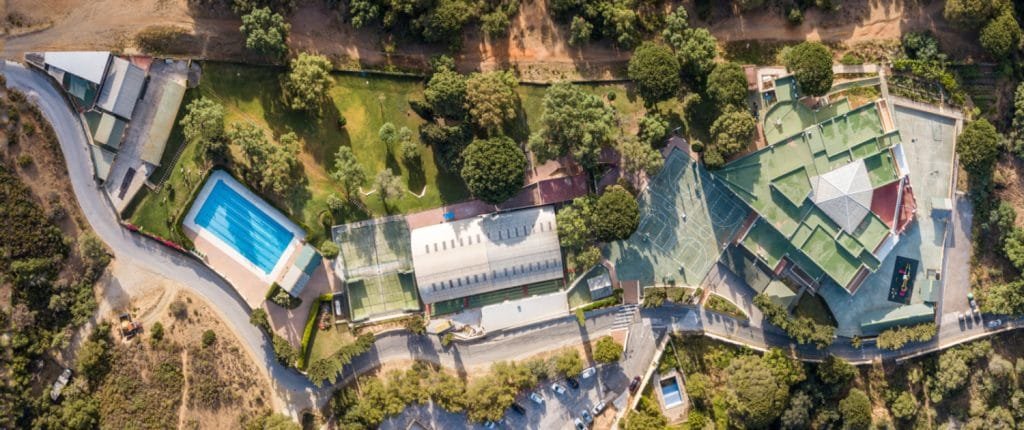
Campus facilities include sports areas, specialist learning spaces and an indoor gymnasium. The school also provides extracurricular activities spanning sport, languages, music and the creative arts.
Laude offers a school transport service, which may make it practical for families in San Pedro, Guadalmina, Benahavís and western Nueva Andalucía. Confirm current routes, stops, availability and fees directly with the school.
Ask the school about: when pupils choose their pathway, the possibility of moving between systems, current Sixth Form qualifications, transport and the language balance within each programme.
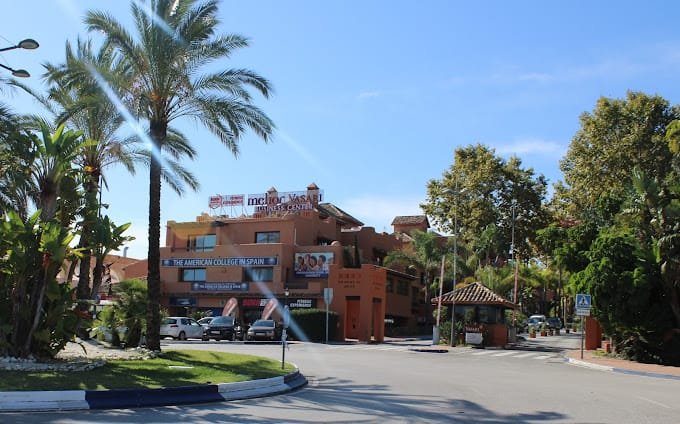
The American College in Spain is based in La Alzambra near Puerto Banús. Unlike most institutions in this guide, it concentrates on middle school, high school and early university education rather than providing a complete preschool-to-age-18 pathway.
Its programmes include an American High School Diploma and GED preparation. The college also advertises university-level general-education courses connected with Keiser University, with the possibility of continuing or transferring studies subject to the receiving institution’s requirements.
This option is therefore most relevant to older students intentionally following an American educational route.
Ask the college about: the entry age for each programme, accreditation and awarding bodies, the institution issuing each diploma or academic credit, qualification recognition and which courses are delivered directly in Marbella.
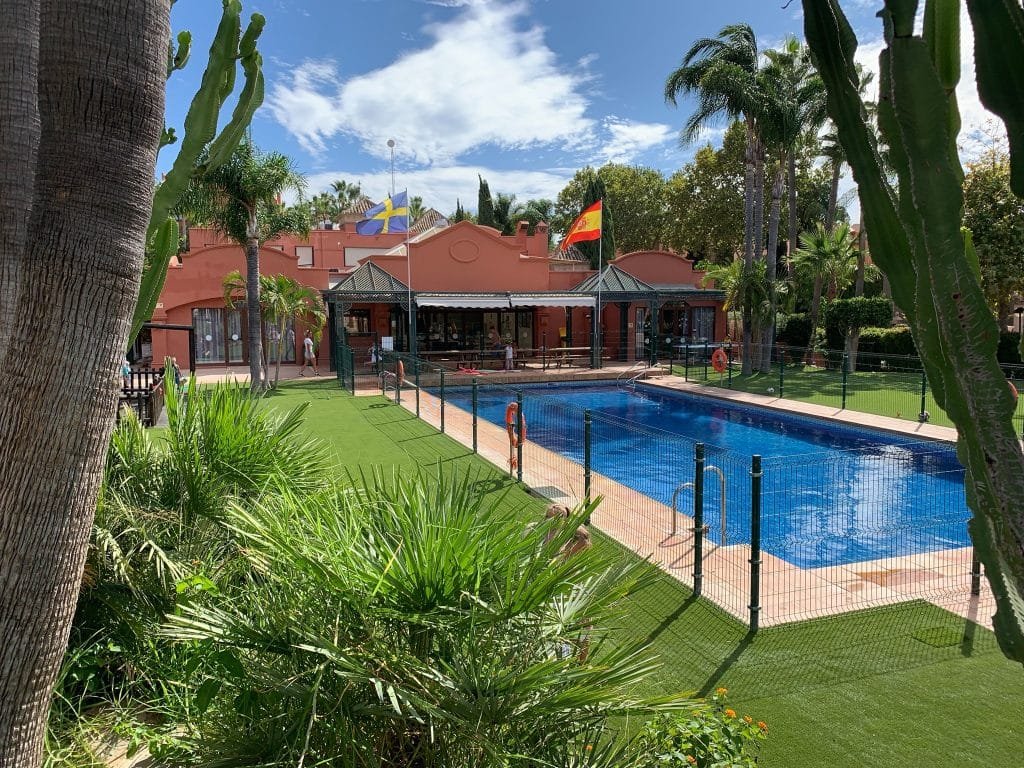
Svenska Skolan Marbella is situated in La Alzambra, Nueva Andalucía. It operates under the supervision of the Swedish National Agency for Education and with authorisation from the Junta de Andalucía.
The Marbella campus provides preschool for ages 3–5 and Swedish compulsory-school education from preschool class to Year 6. Years 7–9 continue through Sofia Distans, while upper-secondary students follow programmes provided by Hermods. These courses are delivered remotely by these institutions, with guidance and study support available in a physical classroom at the Marbella campus.
Facilities include a swimming pool, padel courts, a football pitch and outdoor recreation areas.
Ask the school about: how supervised distance learning is organised on campus, enrolment eligibility, external programme fees and continuity when returning to Sweden.
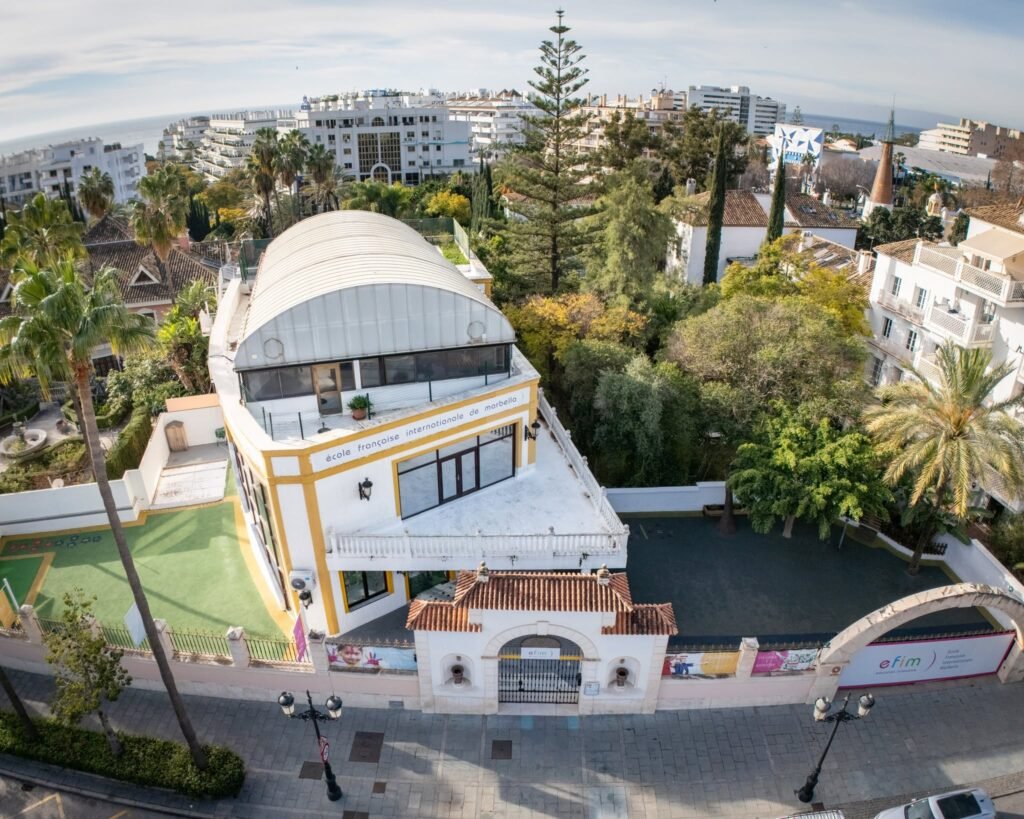
École Française Internationale de Marbella is a French nursery and primary school in central Marbella. Its provision extends from Petite Section to CM2 and is approved by the French Ministry of National Education.
The school combines the French curriculum with a trilingual French, English and Spanish environment. It is particularly relevant to Francophone families and internationally mobile families seeking continuity with the French system.
EFIM does not provide a complete secondary pathway, so parents should consider where their child would continue after CM2.
Ask the school about: eligibility without fluent French, the language balance in each class, transition after CM2, transport and current fees.
Colegio Alborán is a private Spanish school in east Marbella, providing education from age 3 through Infantil, Primaria, Secundaria and Bachillerato.
Its curriculum follows the Spanish educational system rather than a British, American or IB programme. The school places particular emphasis on languages, sport, music and education within a natural campus environment.
Campus facilities include an equestrian centre, a semi-Olympic swimming pool and dedicated provision for music and sport. French is also offered within the school’s language programme.
Alborán may suit internationally based families who want their children to integrate into the Spanish system while attending a private school.
Ask the school about: how much teaching is delivered in English, language support for pupils arriving from abroad, Bachillerato options and transition into the Spanish curriculum.
Deutsche Schule Málaga is an independent German school recognised by the German and Spanish education authorities. It provides education from Kindergarten through Primary and Secondary to the German International Abitur.
It emphasises teaching in German, Spanish, English, and French, with a strong focus on natural and social sciences, art, music, and sports.
Although commonly included in Marbella school guides, its campus is in La Mairena, Ojén. Families should evaluate the journey carefully, particularly when travelling from central Marbella, Nueva Andalucía or San Pedro.
The school states that its transport network covers the coast between Málaga and Estepona, potentially making it accessible from several residential areas.
Ask the school about: entry requirements for children without German, the balance between German and Spanish instruction, recognition of previous studies, bus routes and progression to the Abitur.
The most practical shortlist often depends on where the family plans to live. Marbella’s international schools are distributed across several areas. The table below shows which schools may be practical to investigate from each residential area.
| Residential area | Schools that may be practical to investigate |
|---|---|
| Nueva Andalucía and Puerto Banús | Aloha College, Svenska Skolan and The American College in Spain |
| Golden Mile, Nagüeles and Sierra Blanca | Swans International School and BISM |
| Marbella centre | BISM, Swans and EFIM |
| San Pedro, Guadalmina and western Marbella | Laude San Pedro |
| East Marbella, Elviria, Las Chapas, Cabopino and Los Monteros | EIC and Colegio Alborán |
| La Mairena and the hills east of Marbella | Deutsche Schule Málaga |
The nearest school is not always the quickest to reach. Direction of travel, school start times and congestion on the A-7 can substantially affect the morning journey. Before choosing a home, test the route during a normal term-time weekday and ask each school about its current bus routes and stops.
International school fees in Marbella vary by school, year group and educational programme. As an initial planning guide, tuition generally ranges from approximately €5,000 to €20,000 per child per year, although some fees fall outside this range. Early-years places may cost less, while Sixth Form, IB and senior secondary programmes are generally towards the upper end.
These figures are for early budgeting rather than quotations. Several schools do not publish complete fee schedules, so confirm current tuition and additional charges directly with each school.
| School | Indicative annual tuition |
|---|---|
| Aloha College Marbella | €8,165–€19,800 full-time tuition for 2026/27; half-day Nursery €5,045 |
| Swans International School | Fees on request; generally upper-end |
| British International School of Marbella | Fees on request |
| The American College in Spain | Fees on request |
| Laude San Pedro International College | Approx. €6,000–€11,000 |
| English International College | Fees on request |
| Svenska Skolan Marbella | Approx. €6,900–€10,700; external distance-learning fees may apply |
| École Française Internationale de Marbella (EFIM) | Fees on request |
| Colegio Alborán | Fees on request |
| Deutsche Schule Málaga | €5,660–€7,385 tuition for 2026/27; additional charges apply |
Tuition may not represent the complete annual cost. Ask for an itemised schedule covering application and registration fees, reservation payments, refundable deposits, meals, transport, uniforms, devices, examinations, trips and extracurricular activities. Confirm whether reservation payments are additional or credited against tuition.
A school with lower tuition may not have the lowest complete annual cost.
Each private or international school manages its own admissions process. Applications may be accepted during the academic year, but admission depends on availability, the pupil’s academic background and whether the school can offer an appropriate placement.
Families may be asked to provide:
Some schools also require an assessment, interview or campus visit. Older pupils may need an additional academic review before joining an examination programme, as schools following the same broad curriculum can offer different subjects, syllabuses and examination boards.
For pupils joining mid-year, ask about language assistance, academic transition and pastoral integration. When comparing academic performance, request recent examination results presented alongside the relevant cohort size and qualification pathway.
Apply several months in advance where possible and consider enquiring up to a year before a September start for popular year groups. Availability varies by school and year group, while entry to IGCSE, A-Level and IB programmes may involve additional academic requirements. Secure an appropriate school place before choosing a home based around one particular campus.
International and private schools in Andalucía must hold the appropriate authorisation for the education they provide. Several British schools are also members of NABSS, which represents more than 80 schools and operates its own inspection service.
NABSS membership is useful but is not the same as government authorisation. Parents should confirm that the school is authorised for the relevant educational stages and check its current inspection status and qualification recognition.
Ideally, shortlist schools before committing to a home. A property may appear suitable until the preferred school has no place in the required year group or the weekday journey proves impractical.
A sensible order is:
1. Identify the required curriculum and final qualification.
2. Ask about availability in the child’s exact year group.
3. Submit the required reports and complete any assessment or interview.
4. Visit the shortlisted schools.
5. Obtain a written offer and understand what payment is required to secure the place.
6. Secure an appropriate school place.
7. Confirm school-bus routes and test the journey during a term-time weekday.
8. Choose a residential area that works with the viable school options.
Do not choose a home solely because it is close to a well-known school. Curriculum suitability, availability and the child’s individual needs should be confirmed first.
Families living in western Marbella, Benahavís or Estepona—or those unable to find the required curriculum or availability among the schools above—may wish to broaden their search.
Options to investigate include:
Some of these schools can involve a substantial daily journey from Marbella. Consider them when their curriculum, boarding provision or confirmed availability justifies widening the search, and test the route during a normal term-time weekday.
International schools are not the only option. Children living in Marbella may also enter Andalucía’s tuition-free public-school system, subject to the applicable enrolment procedures, available places and address-based admission criteria.
Public education can be a strong option for families intending to remain in Spain and for younger children likely to adapt to Spanish-language teaching. Language support, including ATAL provision for eligible pupils who arrive with limited Spanish, may be available depending on the child and allocated school. The transition can be more complex for an older pupil already partway through GCSE, IB, A-Level or another international examination programme.
Public-school placement is managed through the Andalusian education system rather than individual school admissions departments. The principal application period for a September start is normally held in spring, although procedures exist for families arriving during the school year. Check current dates, documentation and placement requirements with the Junta de Andalucía or the relevant local education office.
Yes, provided the child has an immigration status that permits them to live and study in Spain. Many children attend as dependants under a parent’s residence authorisation, while a study visa may be possible in qualifying circumstances.
Admission to a school does not automatically provide immigration permission. Requirements depend on the family’s circumstances, the child’s age and the programme, so confirm the current position with the relevant Spanish consulate or a qualified immigration adviser before enrolling.
Related Reading for Families in Marbella
RECOMMENDED LINKS AND RESOURCES
Expedia: To find cheap flights and good deals from your home country, start by checking Expedia—a great place to begin your search.
Hotels.com: Choose Hotels.com for a diverse range of luxury and resort hotel properties. Enjoy a seamless experience with a rewarding loyalty program and a price guarantee. Earn points with every booking, and enjoy complimentary hotel stays.
Plum Guide: When it comes to indulgent stays, our top recommendation is Plum Guide. Their exclusive collection of high-end vacation home rentals undergoes stringent assessments for comfort, design, and functionality.
Discover Cars: For rental car price comparison and booking, with no hidden costs and the flexibility of free cancellation when you book your rental car through them.
Get Your Guide: For the best selection of tours and activities, highly rated by fellow travelers.
Disclosure: All listings featured on TAO LIVIN’ are independently selected by our editors. If you click through and book something through our links, we may earn a commission at no extra cost to you. Thanks for your support!